M4 Automated Pipe Spool Welding
AutonoWeld M4 by SEC: Evolutionary Welding. Engineered for Payback.
AutonoWeld M4 Pipe Spool Welding Platform
The AutonoWeld M4 is a dual-position automated welding platform engineered for high-throughput pipe fabrication. In 1G, it completes a three-pass butt weld on 6 inch schedule 40 pipe in about 12 minutes, against roughly 75 minutes by hand. In 2G, it welds a complete 10-branch pulled-tee header in about 22 minutes, a job that takes a manual welder close to eight hours.
The M4 runs natively on pulled-tee geometry, not just machined components, and sustains arc-on time near 85 percent across a full shift. Same operator, same shop floor, dramatically more output.
Whether you are producing spools for data centers, chilled water systems or heavy industrial piping, the M4 is built to turn labor hours into margin, with payback measured in weeks rather than years.
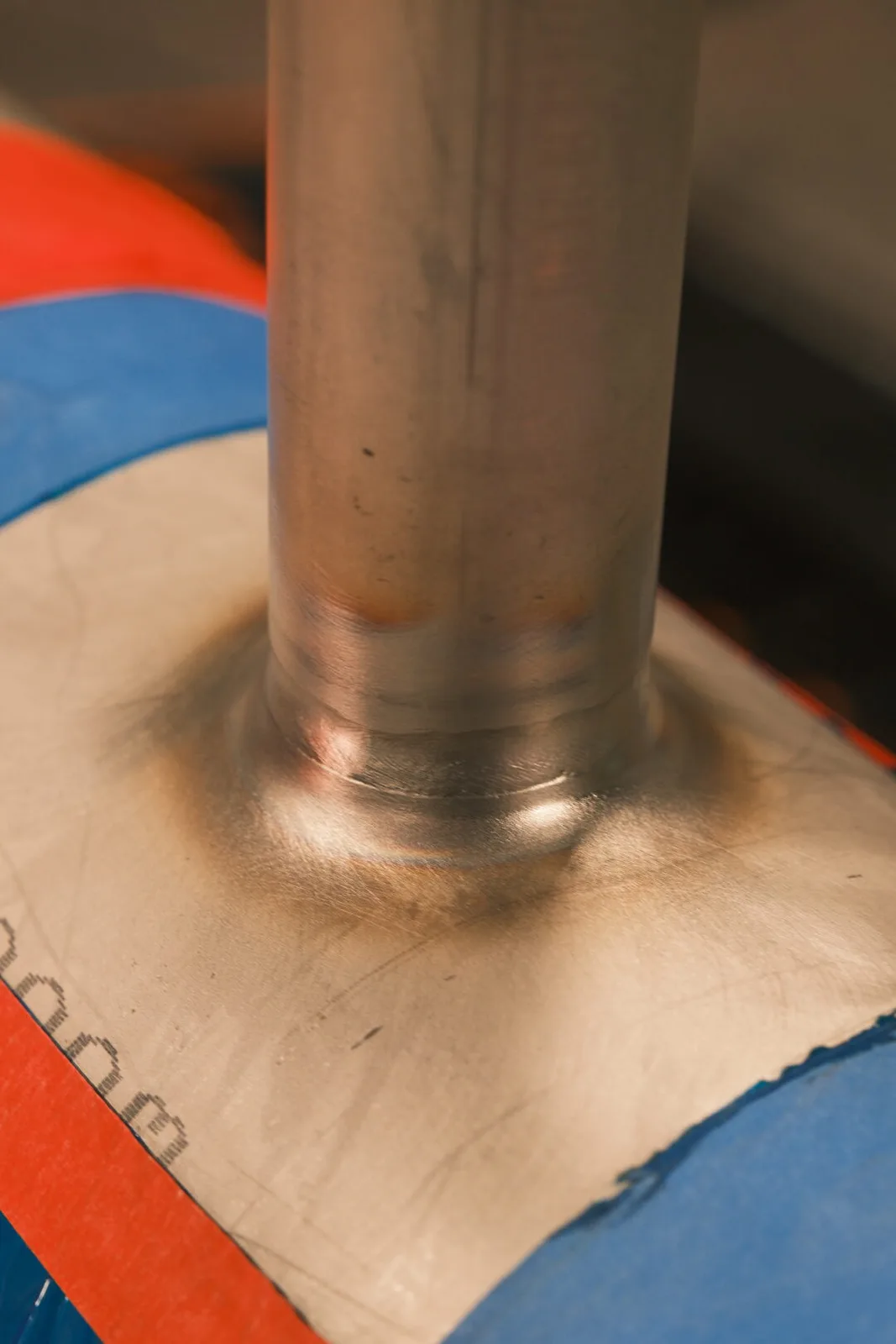
faster per header than manual
faster on 6" butt welds
arc-on time per 8-hour shift
payback versus manual welding
The Complete M4 Cell, End to End
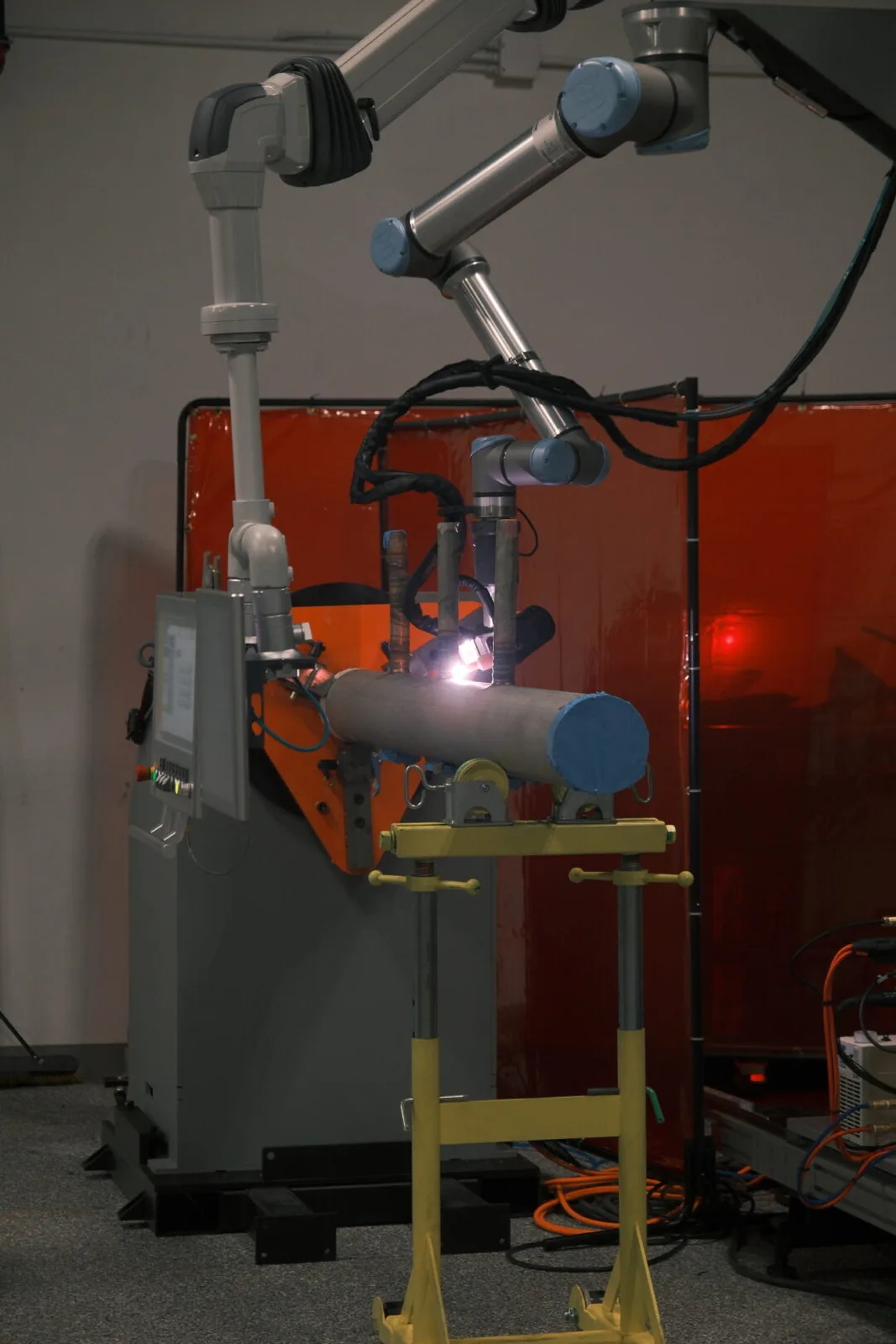
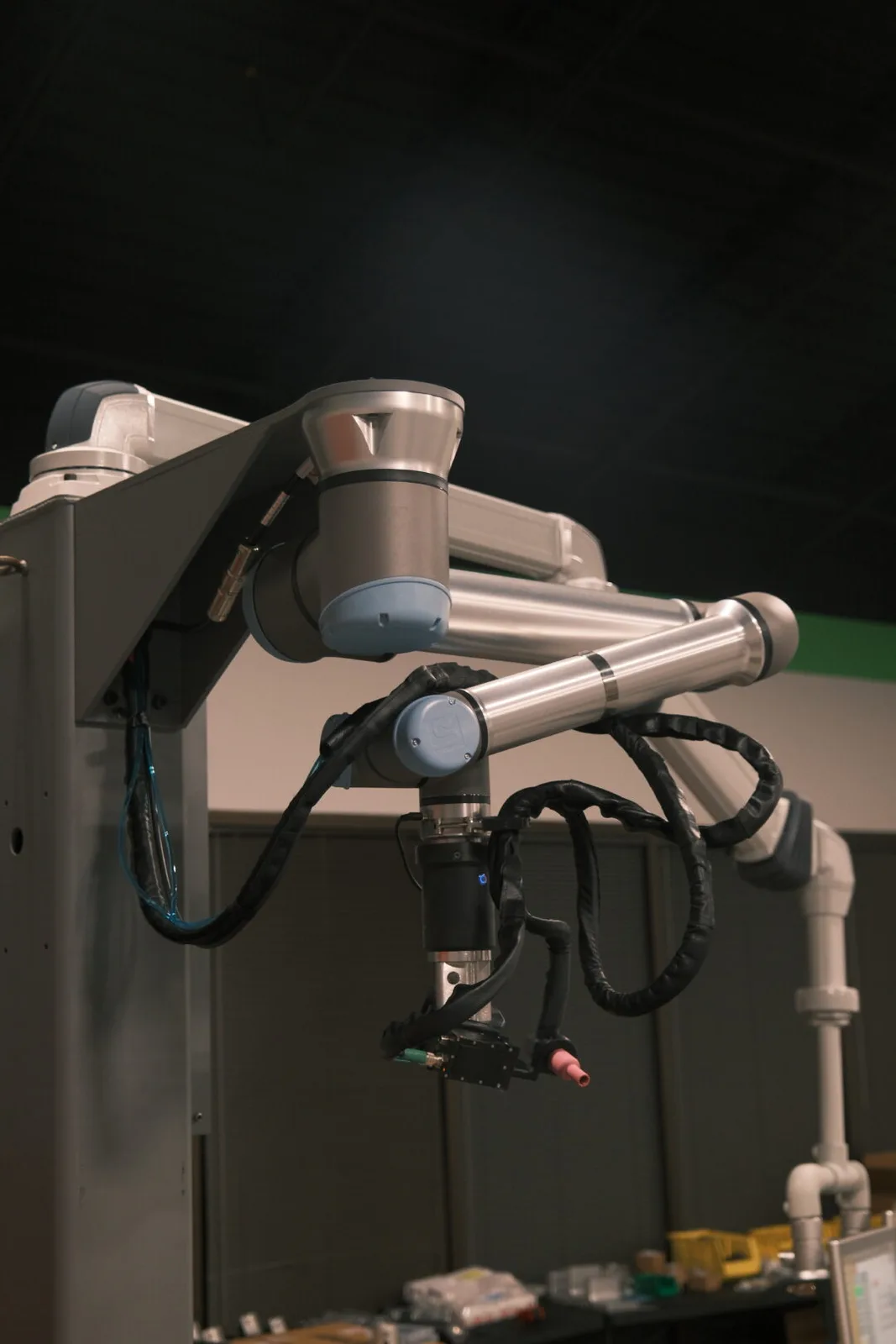
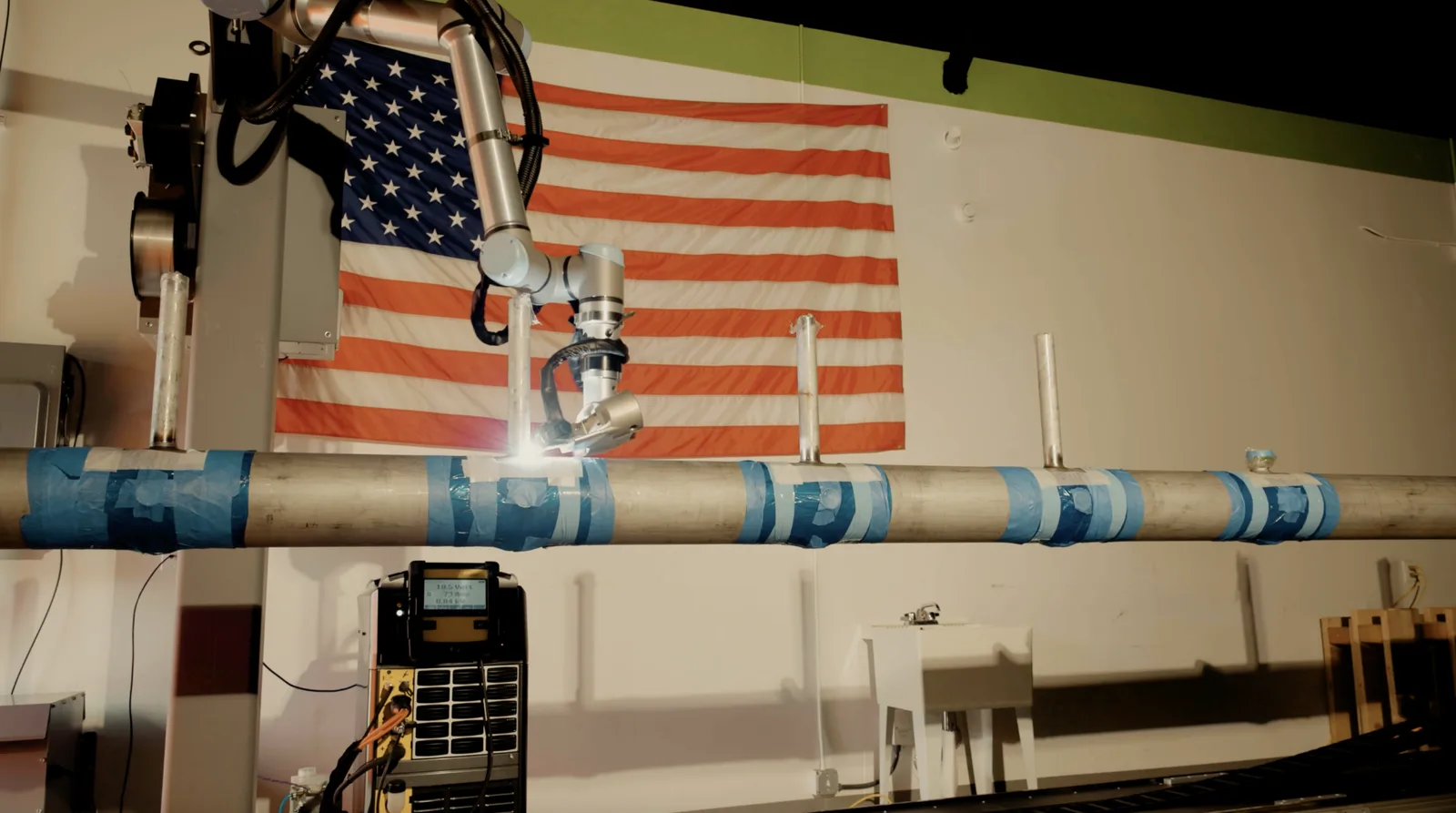
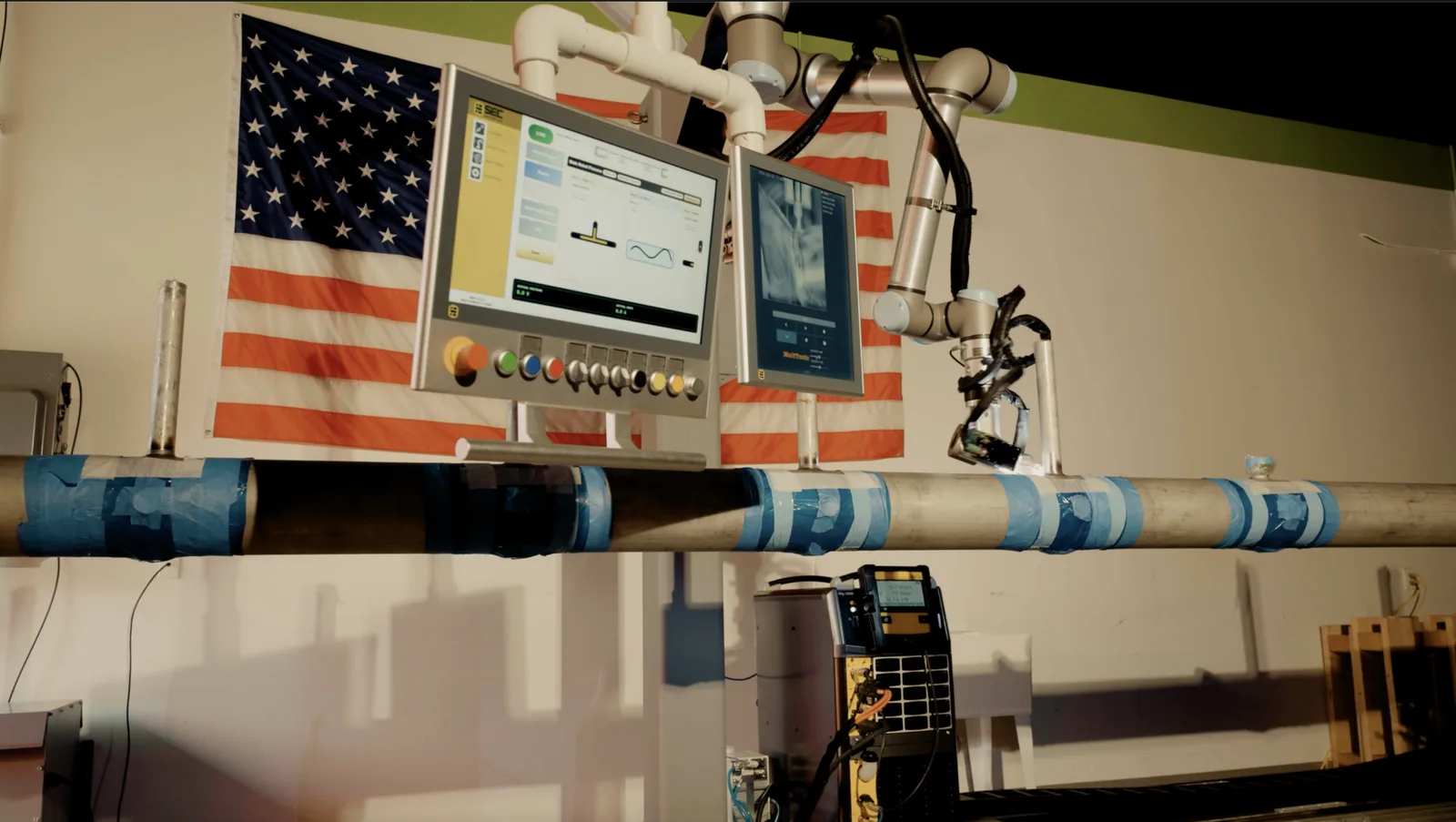
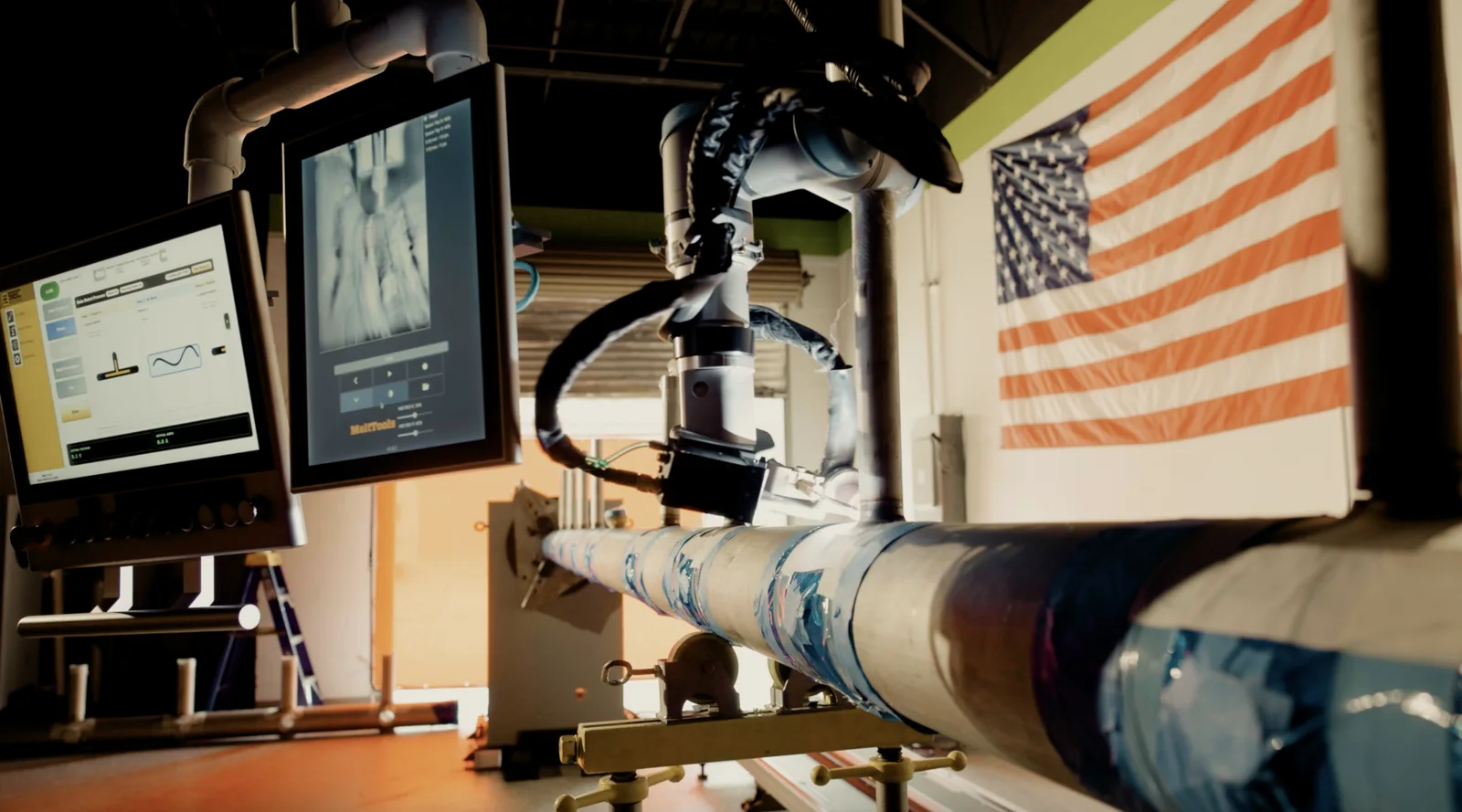
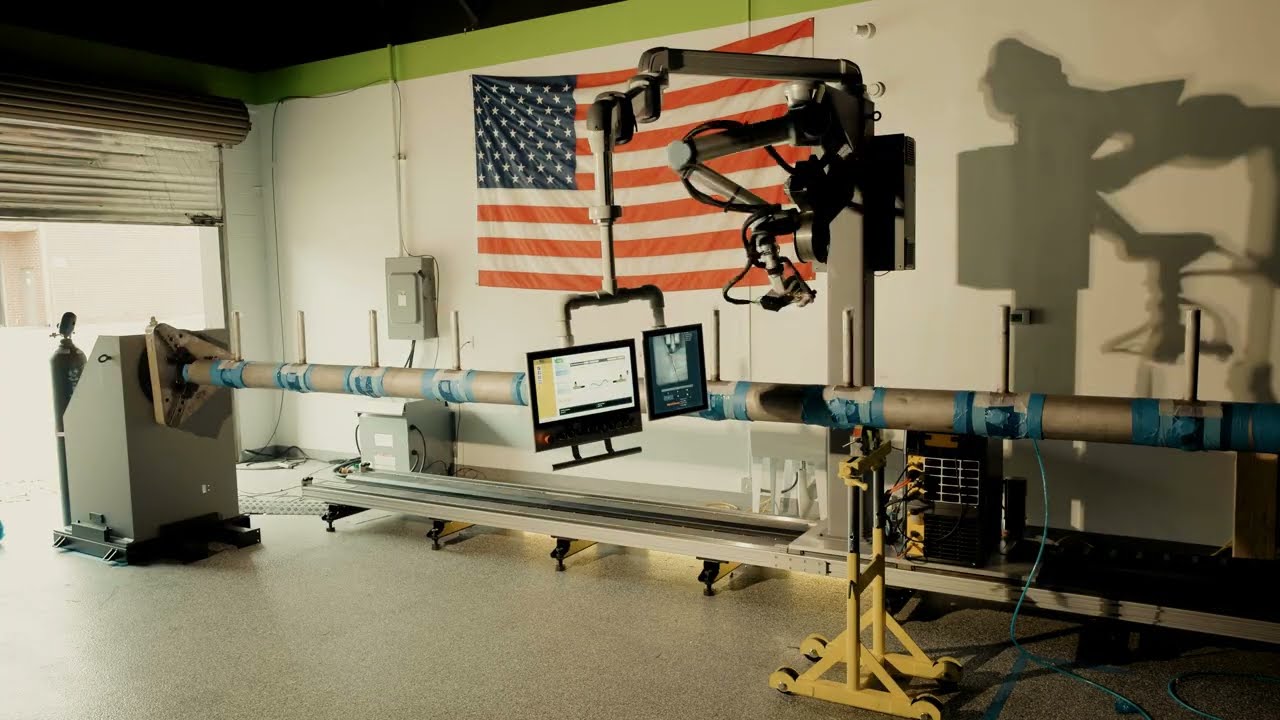
Headstock and tailstock positioners, a 20 foot precision rail, a six axis cobot torch arm with wire feed, and an integrated power source. One operator, one setup per header.
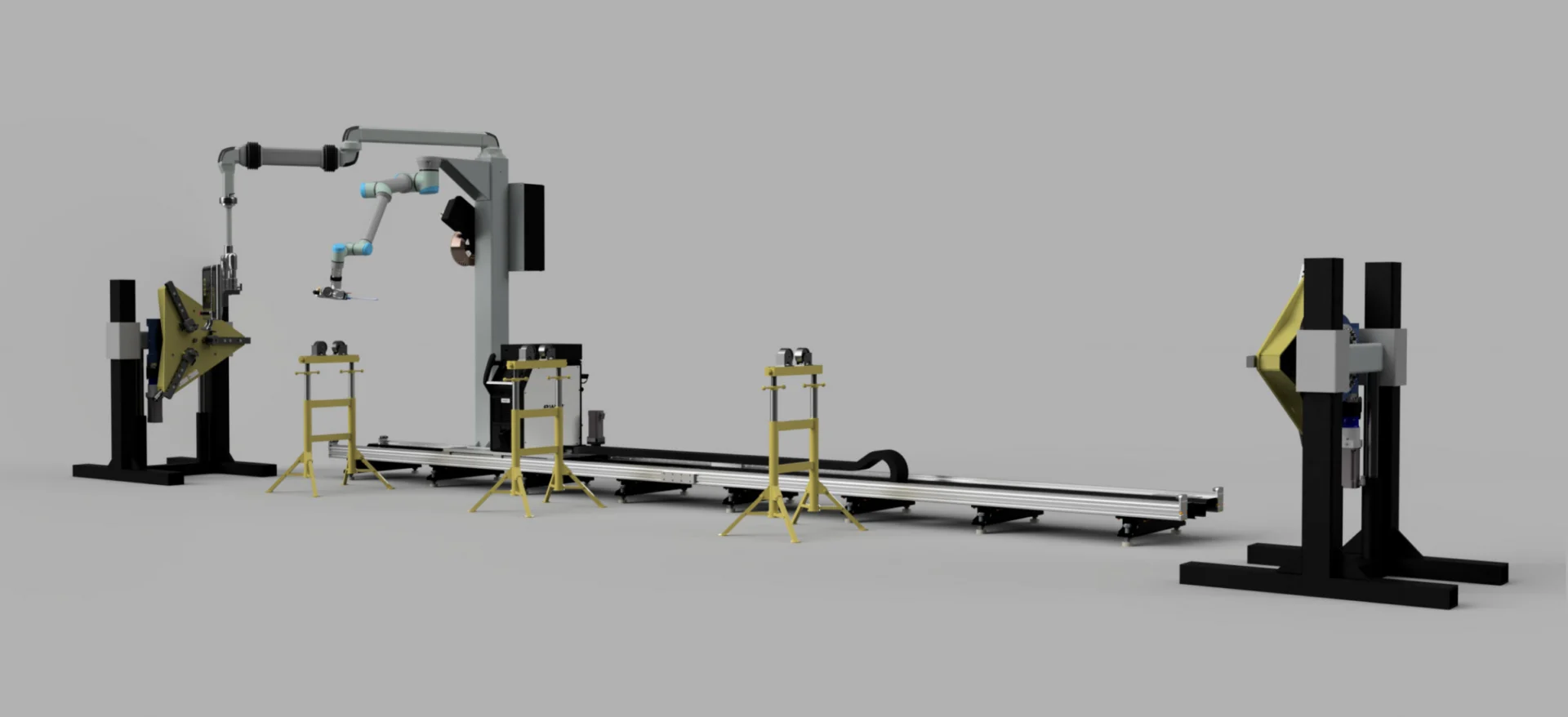
- 1Headstock PositionerGrips and rotates the header for 1G roll out welding
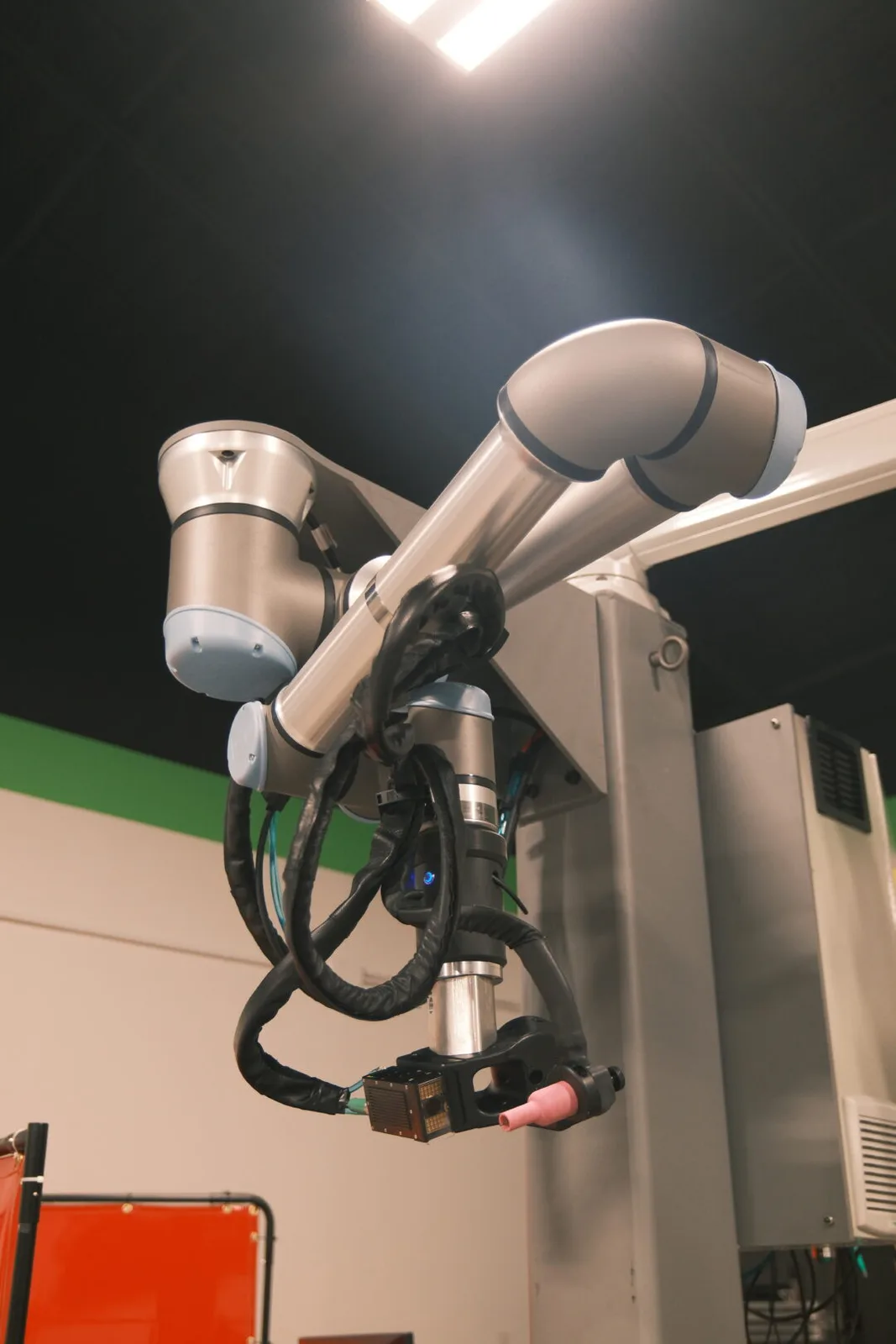
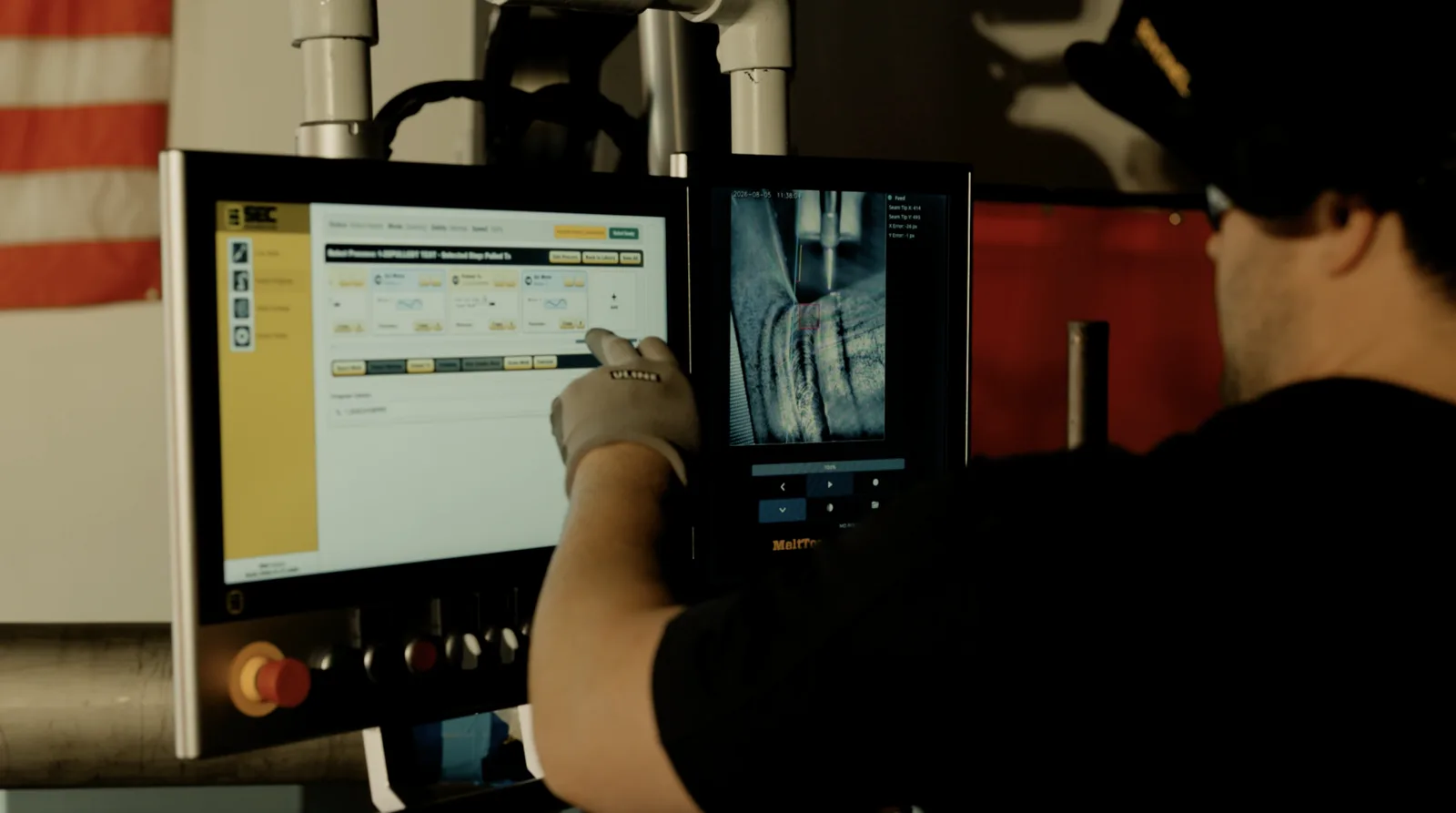
- 2Cobot Torch ArmSix axis arm with torch, wire feed and weld camera
- 3Precision Rail20 foot cell length with adjustable pipe stands
- 4Tailstock PositionerSupports long spools and multi branch headers
Platform Detail
- Dual-position platform: 1G roll-out spool welding and 2G pulled-tee header welding on a single system
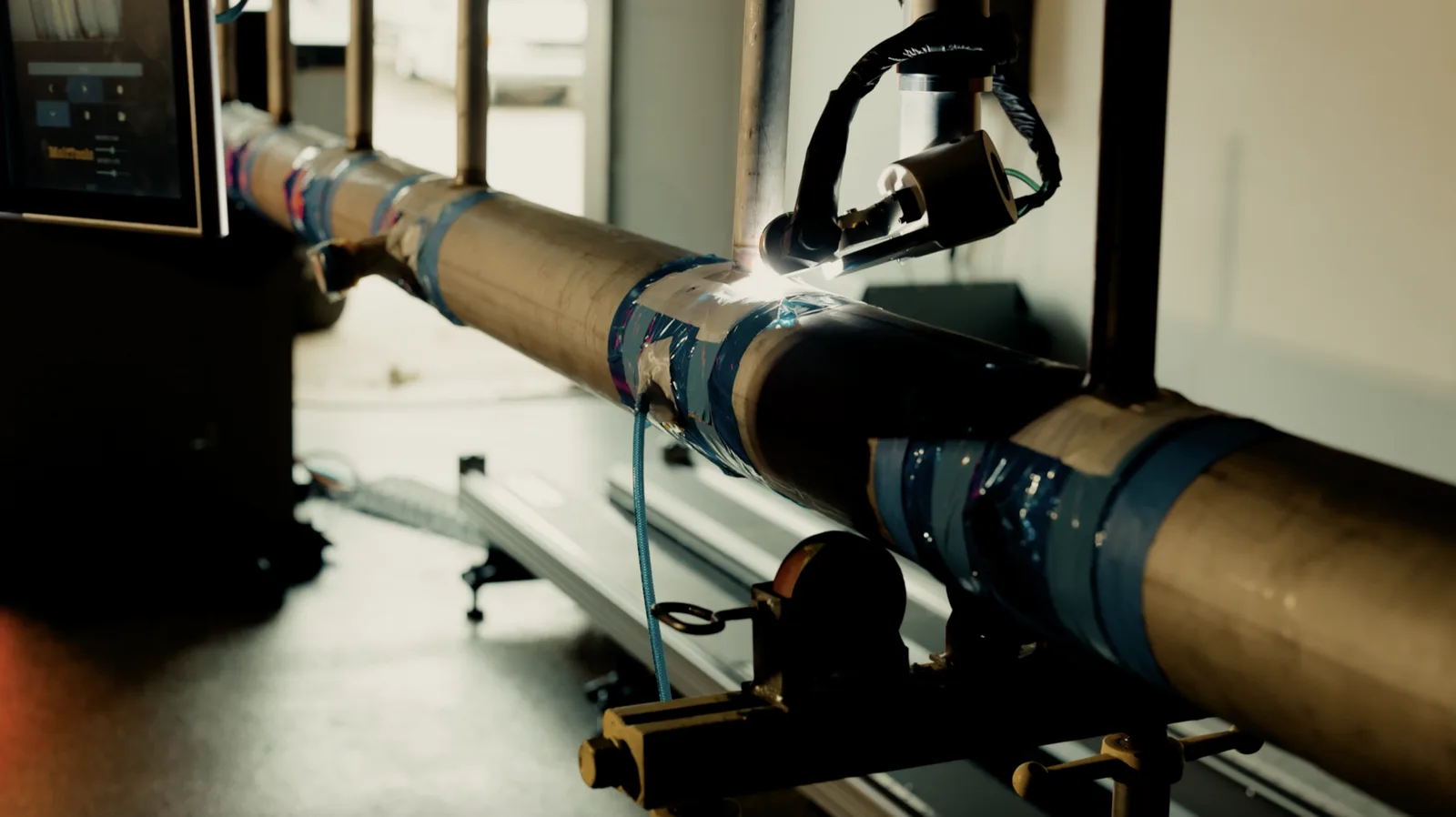
- Native pulled-tee welding: runs directly on pulled-tee header geometry with no machined component requirement and no per-weld setup
- 85% arc-on time: sustained across an 8-hour shift, compared with roughly 10 percent for manual welding
- Optional torch extenders: extend 2G branch capacity up to 25 inch branches
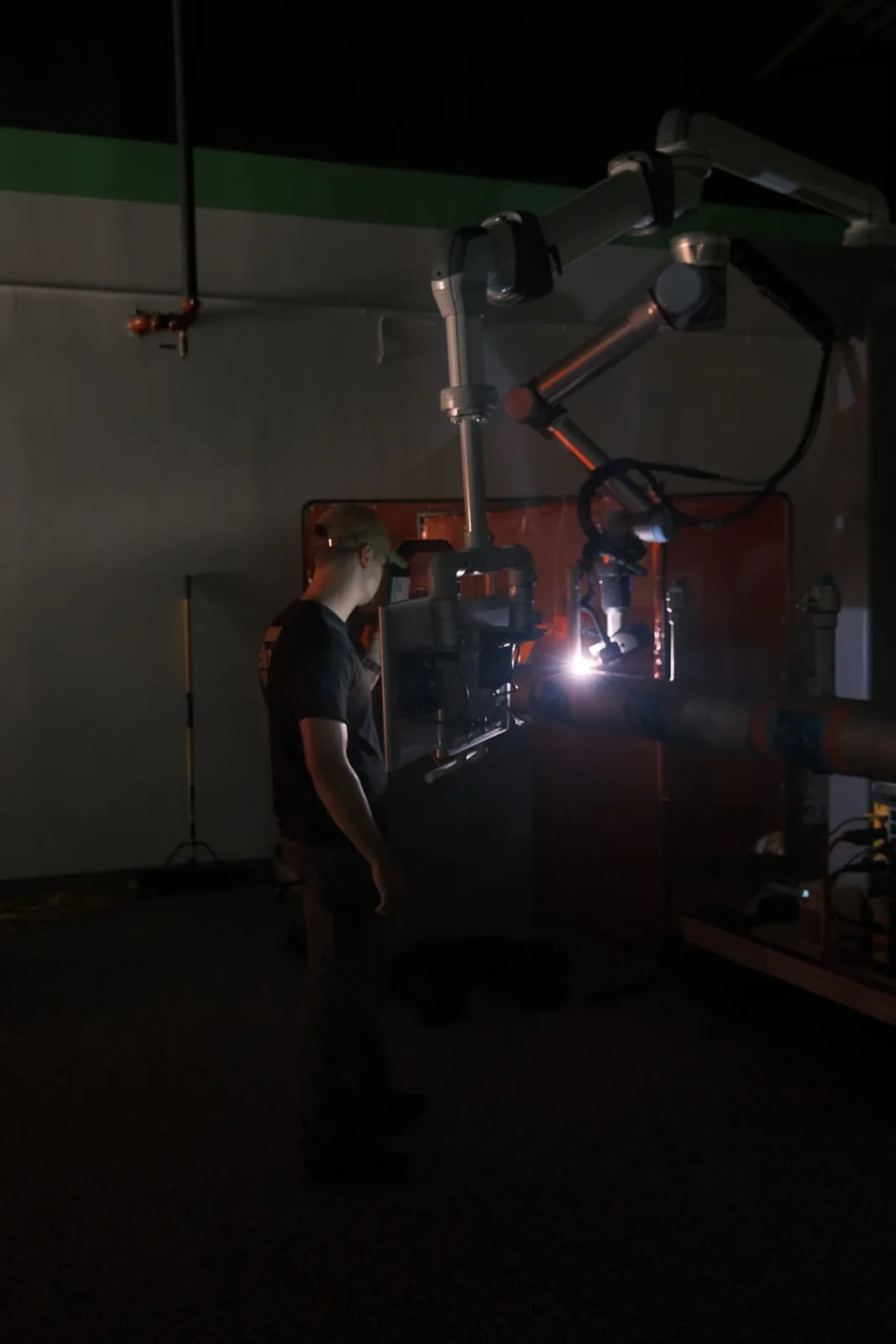
- Same operator, same floor: drops into an existing fabrication workflow without specialized staffing
- Roll-out spool welding for straight runs and butt joints.
- 6" schedule 40 pipe, three-pass butt weld in 12 minutes (about 75 minutes manual)
- Arc-on time near 85 percent across a full shift
- Labor cost drops on every weld, scaling with pipe diameter
- Manual reference: 12" NPS schedule 40 (.406") butt weld, 152.4 minutes
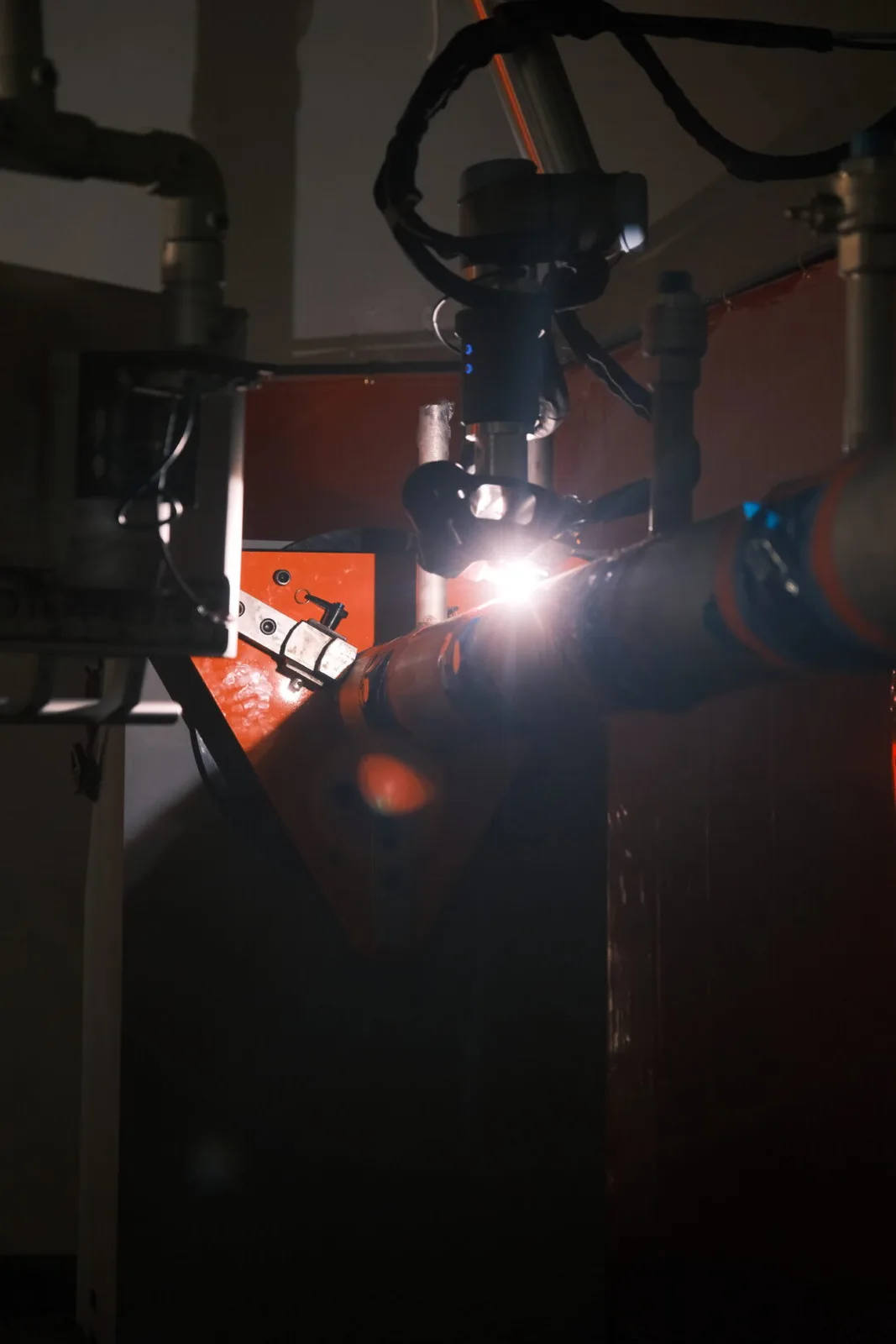
- Pulled-tee header welding, running natively on pulled-tee geometry.
- 6" schedule 10 header with ten 1.25" NPS pulled-tee branches in about 22 minutes
- 2G travel speed of 3.5 IPM
- Up to 8 headers and 80 welds per shift, including material handling
- Optional torch extenders for branches up to 25 inches
Image Gallery
Return on Investment
The return on an M4 comes from one shift: the machine keeps the arc lit while the operator moves to the next job. A manual welder spends most of a shift positioning, tacking and repositioning. The M4 sets up once, takes the header as fabricated, and runs pass after pass without stopping, so every weld takes a fraction of the manual time and labor hours turn directly into capacity.
Payback in roughly 85 days
Measured against manual welding, the M4 pays for itself in about 85 days, and each additional shift widens the gap.
21.8x faster headers, 6x faster butt welds
A 10 branch header runs 21.8 times faster than manual and 6 inch butt welds run 6 times faster, with no added headcount.
Arc on time near 85 percent
Across a full shift the M4 keeps the arc lit about 85 percent of the time, compared to the 20 to 30 percent typical of manual pipe welding.
Where Orbital Can and Can't Compete
Modern orbital welding systems can weld machined pulled-tee headers, but they need roughly 15 minutes of setup per weld at about 3 inches per minute, and they depend on machined components to hold tolerance. The M4, successor to the M3 pipe spool welder, picks up the header as fabricated and welds a full 10-branch header in about 22 minutes. On a three-year total cost of ownership basis it comes out ahead of both an orbital cell and manual welding.
Native pulled tee geometry
The M4 runs on pulled tee headers as fabricated, with no machined component requirement.
One setup per header, not per weld
Set up once for the whole header instead of once per joint, which removes roughly 15 minutes of fixturing from every weld.
Lower three year cost of ownership
When machined parts and per weld setup are counted, the M4 comes out ahead of an orbital cell over a three year total cost of ownership.
The M4 In Action
See what the M4 would
do on your floor
Send us your pipe sizes, materials and monthly volumes. The SEC team will come back with the M4 spec sheet, a cell layout for your space, and a payback estimate built on your numbers. No obligation, and a real engineer on the other end.
Prefer to talk? (404) 301-9411, Monday to Friday.
